Archived newsletter — Spring 2025. This issue preserves historical information; events, contacts, and resources may have changed.
Welcome to the 46th issue of the SIGnetwork Newsletter published for SPDG projects and their partners to learn about upcoming events, the latest relevant research, TA resources and training, and, most importantly, SPDG impact. We’re glad you're here!
Interested in reading past issues? Browse the Newsletter Archive. Was this email forwarded to you? Subscribe here.
This is the end of our series exploring Priya Parker’s ideas from The Art of Gathering.
If you haven’t read the book or just want a reminder of some key ideas, take a look at this summary from Less Wrong. For each chapter there is a summary, insights, and actions to take. My hope is that as a result of sharing strategies from the book you will make your meetings and events spectacular. Here is a quick and dirty reminder or what we learned from the Art of Gathering:
- Start with the purpose in mind when planning each meeting or event.
- Determine who needs to be there and do not include those who do not.
- Take charge of ensuring the event goes well – don’t leave it to chance and don’t be afraid to lead.
- Make it special. It doesn’t have to be like the events that came before it.
- Strive for an opening that is engaging and inspirational. It’s an onramp to the rest of the event.
- Make it human by allowing people to learn about each other.
- Welcome emotions and debate into the room.
- Finish with a flourish. Help participants feel like it is over AND they know what to do next.
Our Book Club book, Dare to Lead, will be the next book we delve into with the SIGnetwork Newsletter. In my estimation, Brenѐ Brown has written a seminal guide to living and leading, and I look forward to sharing what has resonated with the Book Club.
News You Can Use
SPDG Competition News
The FY2025 SPDG Competition was cancelled. If you have any questions, please contact Jennifer Coffey (Jennifer.Coffey@ed.gov).
OSEP Conference & SPDG National Meeting
Calling all good thinkers! We are putting together the committee to plan the SPDG National Meeting and the OSEP Conference SPDG Program Area Meeting. Contact John Lind at signetwork@uoregon.edu with questions or to volunteer.
OSEP Conference
The OSEP Conference registration is open. Please note that only SPDG Project Directors are able to attend the OSEP Conference this year. If you have questions, please contact your Project Officer.
- If you are proposing a presentation and are accepted, you may be able to bring the other presenters to the conference. Please see they FAQs for more information.
SPDG National Meeting
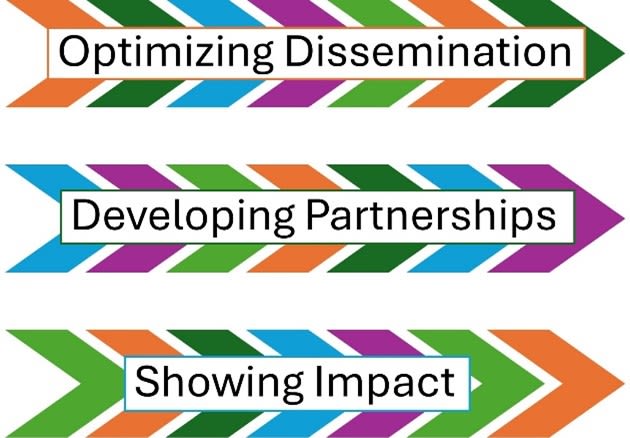
The SPDG National Meeting will be virtual this year on October 15th and 16th. The theme is:
Directors’ Webinar Coaching Series Update

Check out the events calendar for recordings, slide decks, and resources from our Coaching Series webinars.
Improving Professional Learning
A Scoping Review of the Literature on Professional Learning for MTSS
Problem statement: “Despite evidence supporting the effectiveness of MTSS models (e.g., Bradshaw et al., 2012; Burns et al., 2005; Hughes & Dexter, 2011), doubts remain regarding educators' capacity to implement the practices with fidelity.”
Main finding: “Studies evaluated educator knowledge, skills, and dispositions, as well as implementation of the practices that comprise MTSS; however, educator aspirations were rarely evaluated. Moreover, few studies comprehensively evaluated the relations among professional learning and educator knowledge, skills, and dispositions and how those variables interacted to impact implementation.
- Previous research clearly indicates that educators are more likely to implement practices when they see the need for and believe in the importance of those practices (Schmidt & Datnow, 2005; Spillane et al., 2002).
- Moreover, commitment to changing practice is more likely when educators aspire to change because of a moral imperative (Fullan, 2010).”
Castillo, J. M., Scheel, N. L., Wolgemuth, J. R., Latimer, J. D., & Green, S. M. (2022). A scoping review of the literature on professional learning for MTSS. Journal of School Psychology, 92, 166-187.

An Exploration of Middle School Literacy Coaching: A Study of Teachers and Instructional Coaches.
https://doi.org/10.1177/08884064231172733
Article Highlights
- Wexler et al. (2022) found that designated administrators in schools that sustained a schoolwide middle school literacy model (a) clearly set expectations for teachers to use the target set of evidence-based literacy practices, (b) participated in PD efforts, such as reviewing the content of PD, and (c) allowed coaches to become fully embedded in their schools.
- PD and expert coaching targeting elementary and middle school special education and resource room teachers’ multicomponent literacy instruction resulted in improved reading, writing, and spelling outcomes for students with learning disabilities (Weiser et al., 2019).
- Teachers reported that they felt coach-led PLCs were the most helpful support for implementation.
- Coaches reported most wanting training on how to provide teachers with effective feedback and a close second was how to support teacher’s instruction of students with disabilities. Also important to coaches was learning how to encourage coaching buy-in and how to lead PLC meetings.
- Coaches most frequently reported providing feedback on lesson performance as the one individualized coaching method that produced the most instructional change for teachers they had the easiest time working with (47%).
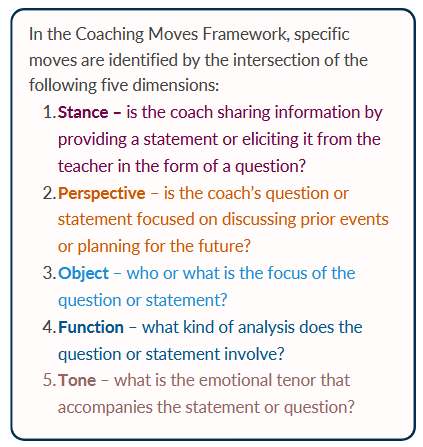
RPPL’s Coaching Moves Framework is a practical guide for PL coaches and coaching leads, offering a shared language for reflecting on and improving PL coaching practice. An extension of the research in Parsing Coaching Practice, this framework is the first of its kind to provide concrete, standard ways of describing what coaching looks like.
Family Engagement Done Well
Elevating Adolescents’ Voices and Roles in Family-School Engagement
Ohio Statewide Family Engagement Center’s student voice project offers articles and presentations educators and others can use to strengthen student voice in family engagement. Visit this page for updates from a new research study and for new resources created by our team. The goals of our student voice project are:
- To improve awareness of the importance of student voice in family-school engagement;
- To highlight real-life stories and examples of students actively leading or participating in family-school engagement;
- To offer research-based strategies for administrators and educators to empower students’ voices and roles in schools’ and districts’ family engagement practices, programs, and policies.
Resources
Family Engagement with Students at the Center (Brief)
The Missing Link: Student Voice in Family-School Partnership (Video of Presentation)
Spotlight on TA & Technology
Evaluators' Corner
Fidelity of Implementation in Educational Research and Practice
This paper from the Wing Institute provides the history of implementation fidelity in education. It also describes key features of fidelity, measurement approaches, and provides connections between fidelity and research/practice.
Interesting Finding: “… a reliable estimate from direct observations required only four observations, while permanent product fidelity required five observations, and self-report required seven observations. Correlational analyses found that direct observations and permanent product reviews significantly correlated, while direct observations and self-report did not.”
Key recommendations:
1. Those overseeing professional learning should receive training on the importance of:
- operationally defined independent variables
- training manuals
- explicit implementation
2. Efforts need to be made to increase the acceptability and contextual fit of a new intervention (Detrich, 2014).
- Involve school staff in making decisions about interventions or procedures for implementation.
- Professional development be explicit and evidence based, and that it include ongoing coaching support.
- Implementers should receive feedback that ideally is visual and provides suggestions for increasing or decreasing specific behaviors (Ennis et al., 2018).
Tweets/Podcasts/Videos
Implement. Change in Education podcast
Episode #6 Guests: Dr. Sonja Brookins-Santelises (CEO) and Alison Perkins-Cohen (CoS) in Baltimore City Public Schools. Together they share insights on the challenges of implementation in schools.
If You Have a Minute
Is Math Teacher-Prep Not Teaching Enough of the Basics?
By Sarah D. Sparks — April 08, 2025
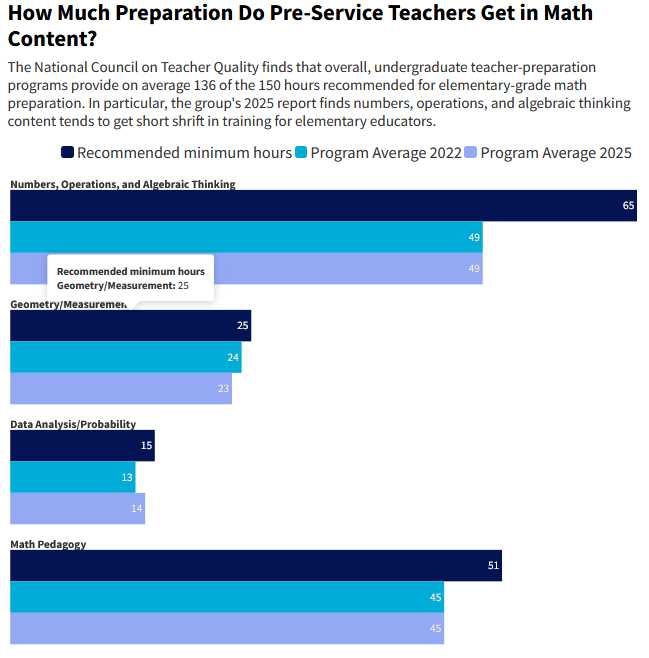
The National Council on Teacher Quality (NCTQ) found that generally future teachers do not receive a sufficient foundation of math concepts (84% pf graduate-level program grads).
“NCTQ considers a program to meet minimum requirements if elementary teacher-candidates receive at least 150 instructional hours (or about 10 credits) in math, including 105 hours in math content and 45 hours on math instruction, or pedagogy. Programs that meet all of those standards get an A+, while those with less than 90 instructional hours get an F. Programs get credit for some of the content requirements if they only admit students who have passed a content knowledge licensing test.”
How Much Preparation Do Pre-Service Teachers Get in Math Content?
Can AI Effectively Coach Teachers?
Article by Madeline Will — February 14, 2025
Highlights
- It can provide initial feedback to teachers.
- It can help with administrative tasks so coaches have time for deeper coaching.
- 57% of teachers said they would be somewhat or very comfortable incorporating AI into training or coaching.