Archived newsletter — Winter 2025 + 1. This issue preserves historical information; events, contacts, and resources may have changed.
Welcome to the 45th issue of the SIGnetwork Newsletter published for SPDG projects and their partners to learn about upcoming events, the latest relevant research, TA resources and training, and, most importantly, SPDG impact. We’re glad you're here!
Interested in reading past issues? Browse the Newsletter Archive. Was this email forwarded to you? Subscribe here.
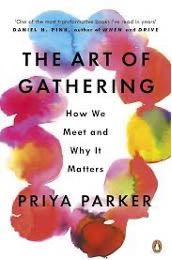
We are continuing our series exploring Priya Parker’s ideas from The Art of Gathering. The first chapter, DECIDE WHY YOU’RE REALLY GATHERING, is all about getting clear on the purpose of the event and ensuring each aspect is geared toward reaching that purpose. The second chapter, CLOSE DOORS, describes why opening the event to any interested party may prevent you from fulfilling the event’s purpose. Last month we discussed why Parker recommends DON’T BE A CHILL HOST and how to CREATE A TEMPORARY ALTERNATIVE WORLD. Then we learned why we should NEVER START A FUNERAL WITH LOGISTICS. Finally, we considered why you should KEEP YOUR BEST SELF OUT OF MY GATHERING and why we should cause good controversy. Chapter 8, ACCEPT THAT THERE IS AN END is summarized here by LessWrong:
Summary: Just like people often fail to start meaningfully, people often fail to end well. Generally, this is an opportunity to meaningfully reflect on what has happened and what you will bring from this back out into the world.
Insights:
- Gatherings should have a "last call", something that makes the guests aware that things are coming to a close and gives them time to settle anything outstanding (p. 254)
One way you can do this, and help address the problem of having both tired and still quite involved guests, is to switch rooms, opening up those who are tired to leave (p. 256)
- A strong closing involves first looking inward, contemplating what you learned or experienced there today, and then looking outward, how you will incorporate that into your outside life (p. 259)
- Strong Closers:
Closing a week long event, the "If These Were My Last Remarks" session "features approximately twenty participants, each of whom is given two minutes to tell the group what they would say if this were the end of their life" (p. 261)
In the Jewish funeral ritual "the person presiding over the funeral asks everyone except for the immediate family to form two lines facing each other, making a kind of human hallway from the grave site to the cars. Then the rabbi asks the immediate family to turn away from the grave and walk down that makeshift aisle, and as they do so, to look into the eyes of their friends, who 'are now like pillars of constancy and love...a way to usher them into the next part of their journey" (p. 280)
"It's the yoga classes that end in a collective 'Om'...it's teachers who end class on a story...it's walking your guests to the door to say goodbye" (p. 280)
- With longer events designed to build bridges especially, incubating the world participants will step back into when they leave will be quite useful, a stress test of sorts and chance to put what they've learned into practice (p. 264)
- Never end on logistics (p. 271)
- Make thank yous the second to last part of the meeting. And actually, instead of thanking, honor people for what they've contributed (p. 278)
Things to Do
- End your meetings before things have started to die down, such that people have left with a feeling of being at the peak of things and have something they want to come back to.
Questions to answer to figure out when to end (p. 257):
What is your equivalent of the twenty-people-left-on-the-dance-floor moment?[1]
When, by transitioning into that last call, are you still in charge of events instead of being carried by them?
When are you still quitting while you're ahead?
When are you allowing things to go on long enough to feel satisfied with the event--but not so long as to feel the energy draining from the room?
- Questions you should answer in guiding what guests should take back out into the world (p. 267):
We've collectively experienced something here together, so how do we want to behave outside of this context?
If we see people again, what are our agreements about what and how we'll talk about what occurred here?
What of this experience do I want to bring with me?
- This was an earlier example, where Queen Elizabeth's party planner emphasized that letting a gathering naturally peter out is unideal, and you should instead have a critical mass at which you call things done (which for her was 20 people on the dance floor)
News You Can Use
Analysis of Reporting Measurements Highlights Improving Outcomes for Children with Disabilities
The 2024 IDEA SPP/APR Indicator Analysis: Improving Outcomes, Creating Lifelong Opportunities for Children and Youth with Disabilities, highlights eight IDEA Part C and B indicators focused on improving outcomes for infants, toddlers, preschoolers, school-aged students and youth.
State and Local Governments: First Steps Toward Complying with the Americans with Disabilities Act Title II Web and Mobile Application Accessibility Rule
In April 2024, the Department of Justice (or “Department”) published a rule that sets technical requirements for state and local governments to follow to make sure that their websites and mobile apps are accessible to people with disabilities. This resource can help state and local governments figure out what they should do to comply with the rule.
New Directors’ Webinar Series on Coaching!

We kicked off the Coaching Series on January 9th with Rebekah Hornak, Project Director of SISEP. She presented a tool for capturing coaching process and impact. Her February presentation focused on measuring coaching outcomes.
Resources Discussed and Shared:
- Presentation Slides: Link to Slides
- Coaching System Template tool (view only, but you can make a copy). Link to Tool
- District Video: Link to Video
Please share your coaching needs, sub-topic ideas, resources and preferred speakers with myself or John Lind.
SPDG Success!
The Kansas SPDG supports mental health and social-emotional learning for children with disabilities. 84.21% of students with disabilities receiving targeted mental health interventions demonstrated progress in positive mental health; and 2,831 children and youth improved their self-regulation, self-calming, and/or mindfulness as documented by educators.
Improving Professional Learning
The Education Gadfly, Fordham Institute: Flypaper
A bold state move to improve reading, by Emily Freitag
“Much has been written about the “Mississippi miracle.” Many other states have learned from Mississippi’s 2013 Literacy Based Promotion Act and mimicked Mississippi’s policies and teacher trainings.
However, there is one move that Mississippi leaders made that I have not seen any other state implement. Given Mississippi's outsized gains, I think it is a move worth lifting. Mississippi leaders wanted to improve teacher coaching. Rather than sending money to schools or districts so they could hire coaches, the state hired eighty-five full-time teacher coaches and sent them to schools. They managed the coaches at the state level.
Here is the job description for those coaches. Coaches spent most of their days in their assigned schools coaching and conferencing with teachers, supporting school teams to use high-quality curricular materials, designing professional learning for teachers and leaders, reviewing data, and making recommendations for instructional practices. They spent some of their time in professional learning with the other coaches to support a deep understanding of the science of reading, adult learning theory, and the state policies.
What makes this strategy different—and bold—is that the state leaders implemented a strategy that did not go through districts, schools, or group training but drove embedded support directly into classrooms.”
The article continues…
A Coaching Endorsement Program Blossoms In Utah
From Learning Forward - Free tool: Choreographing a presentation opening when anticipating resistance

Family Engagement Done Well
Guidance for Engaging Critical Perspectives (SISEP)
To be responsive to complex and ever-changing needs in education and other agencies serving children and families, we need to cultivate a culture of deep learning and ongoing improvement. Shepherding this culture are teams who can effectively leverage the expertise of various perspectives both within and without an agency and navigate challenging conversations. To that end, this document guides selecting and engaging diverse critical perspectives to this way of working.
Files:
Spotlight on TA & Technology
Lead IDEA Center Creates Navigator Tool for Principal Retention

Choose the retention issue you want to focus on and learn actions you can take to prevent and respond to that issue.
NCADEMI’s resources and publications page for a broad overview of the center’s technical assistance areas.
New Self-Paced Behavior Progress Monitoring Course from the National Center on Intensive Intervention (NCII)
Do you have questions about how to establish baseline performance, set goals, and analyze graphed behavior data to determine student responsiveness? Check out NCII’s newest self-paced course Behavior Progress Monitoring: Analyzing Data and Making Decisions.
This course is the second part of a two-part series. If you have not done so already, please check out the first module, Behavior Progress Monitoring: Selecting Target Behaviors, Aligning Tools, and Creating a Plan.
Evaluators' Corner
In her current Research & Evaluation column in The Learning Professional magazine, Elizabeth Foster, Learning Forward senior vice president, research & standards, explains why evaluating professional learning is important and offers five tips to help plan and implement professional learning evaluation, regardless of experience or resources.
Tweets/Podcasts/Videos
Brittni Sammons of the Maryland SPDG and the Maryland Coalition for Inclusive Education recently recorded a Podcast on Master Scheduling with Natural Proportions.
How to Connect before Content – short video with Chad Littlefield
If You Have a Minute
No Silver School-Spending Bullets - Education Next
1. State leadership appears to matter. Interestingly, states seemed to play a role in the extent to which ESSER delivered test score outcomes. As the two panels in Figure 1 indicate, districts in states like Mississippi, North Carolina, Ohio, and Tennessee saw greater return in both reading and math scores for the ESSER dollar
- That’s where it appears state education leaders may have had a real effect. For example, education commissioners Catherine Truitt, Carey Wright, and Penny Schwinn, (NC, MS and formerly TN) emphasized reading and math over other agendas, were clear about what constituted success, and measured progress along the way. In other states, districts were on their own to set priorities, while state leaders buried data and brushed off lackluster results.
- Looking ahead, governors, legislatures, and state education agencies wanting to see more academic improvement for the dollar might look to fill the accountability void with a strong statewide focus on measuring and delivering progress on student outcomes.
2. Special education is not a cost-effective remedy for weak reading instruction. The number of public school students enrolled in special education programs jumped by 243,000 students since 2019–20, even as total enrollment fell (see Figure 3). District leaders tell us that many of these students were referred for learning disabilities when pandemic-era closures left them behind in reading.
3. What does work? Where states deliver better reading instruction for general education students, students enrolled in special education benefit, too
NAEP truth bomb: Some states see academic progress. Many do not.
Effects of Large-Scale Early Math Interventions on Student Outcomes: Evidence From Kentucky’s Math Achievement Fund
Abstract:
Addressing the educational needs of students in math early on is critical given that early gaps in math skills widen further over the course of schooling. This study examines the effectiveness and costs of Kentucky’s Math Achievement Fund—a unique state-level program that combines targeted interventions, peer-coaching, and close collaboration among teachers to improve math achievement in grades K–3. The program is found to improve not only math achievement, but also reading test scores and non-test outcomes including student attendance and disciplinary incidents. The benefits exist across students from various socioeconomic backgrounds, and they are slightly higher for racial minorities.
Article highlights:
- To help students in grades K–3 who struggle to meet grade-level expectations, MAF adopts a Response to Intervention (RtI) approach that consists of a universal screener, tiered interventions with increasing intensity, and regular progress monitoring. It also requires professional development for both the intervention teacher and classroom teachers in each grantee school.
- For example, we find no effect of MAF designation on mathematics scores at the end of the first year of implementation, but student mathematics test scores in MAF schools rose by 0.05 standard deviation after 2 years relative to non-MAF schools, 0.08 standard deviation after 3 years, and 0.09 standard deviation after 4 years.
- Evidence also suggests positive spillover effects of the program on reading achievement, with students in MAF schools outperforming non-MAF school students by 0.06 standard deviation after 4 years.
- … relative to non-MAF schools, disciplinary incidents and absences were reduced significantly in MAF schools relative to non-MAF schools.
- …we find that the estimated 4-year per-pupil cost of the MAF intervention is $750 in 2018–2019 dollars, which corresponds to an increase in math test scores by 0.09 standard deviation.