Archived newsletter — Winter 2025. This issue preserves historical information; events, contacts, and resources may have changed.
Welcome to the 44th issue of the SIGnetwork Newsletter published for SPDG projects and their partners to learn about upcoming events, the latest relevant research, TA resources and training, and, most importantly, SPDG impact. We’re glad you're here!
Interested in reading past issues? Browse the Newsletter Archive. Was this email forwarded to you? Subscribe here.
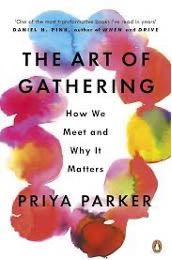
We are continuing our series exploring Priya Parker’s ideas from The Art of Gathering. The first chapter, DECIDE WHY YOU’RE REALLY GATHERING, is all about getting clear on the purpose of the event and ensuring each aspect is geared toward reaching that purpose. The second chapter, CLOSE DOORS, describes why opening the event to any interested party may prevent you from fulfilling the event’s purpose. Last month we discussed why Parker recommends DON’T BE A CHILL HOST. Then we explored how to CREATE A TEMPORARY ALTERNATIVE WORLD. Then we learned why we should NEVER START A FUNERAL WITH LOGISTICS. Now we get to consider why you should KEEP YOUR BEST SELF OUT OF MY GATHERING.
Google’s AI Overview:
“Cause good controversy” …. suggests that controversy can be a positive force at gatherings, adding energy and clarity, and helping people consider what they care about.
Here are some tips for causing good controversy:
- Set up ground rules: Allow people to contribute to the rules, and ask questions to help prime them to open up.
- Structure the controversy: Ritualize it or create a temporary alternate world to make it explicit.
- Consider the risks: It's usually better to surface risks with structure than let them derail the gathering.
- Remember that harmony isn't everything: Sometimes harmony can make a gathering dull and pointless.
- Ask questions: Ask questions to find out where the heat may be.
According to Parker, good controversy can help people answer big questions about who they are, what they stand for, and what they want to do. It can also lead to something better than the status quo.
News You Can Use
The SPDG Fiscal Year 2025 Notice Inviting Applications (NIA) has published (landing page). Applications are due February 18th. Two informational webinars are posted.
2024 SPDG National Meeting

The SPDG National Meeting was October 15-16 in DC “EmpowerED: Elevating Voices, Enriching Education, Embracing Collaboration; The Adventure Starts Here.”
FOMO Follow-up
Decembers’ Directors’ Webinar featured Collaboration and Learn from an Evaluator breakout sessions from the national meeting. A hearty thanks to John Lind and all of our presenters for sharing their knowledge (again) and recording it for posterity.
Recordings:
- 10 Things I Wish I Would Have Known about SPDG Evaluation
- 16 Things to Make Those EBPD Blues Go Away
- CIPP Collaboration During GPRA Reviews
- Developing Competency Self-Checks
- New Mexico ECLIPSE Program
- Student Outcome Fidelity Measure for Literacy Lessons
- F2MAX: Family Engagement
The U.S. Department of Education has several new resources for you. One is guidance to support easy-to-use behavior interventions, one supports choosing evidence-based literacy interventions, and one is a website for rural schools and districts:
New SPDG Directors’ Webinar Series!

We reviewed the post-event survey responses and notes from community meetings and the topic that the most people wanted to hear more about was coaching. We will kick off the Coaching Series on January 9th from 3-4:30 ET (note we have moved the event back a week due to the close proximity to a holiday).
Please share your coaching needs, sub-topic ideas, resources and preferred speakers with myself or John Lind.
SPDG Success!

The Illinois SPDG is focused on supporting new special education teachers in the use of evidence-based practices through the Illinois Elevating Special Educators (IESE) Network. In the most current performance report, 96% of educators who participated in the IESE Network remained in special education in Illinois, as compared to a 92% retention rate for those special educators not supported by the IESE Network.
Improving Professional Learning
Emerging Insights: Supporting Research-Aligned Teacher Development
Paper from RPPL in partnership with the Annenberg Institute at Brown University, Leading Educators, and Teaching Lab. A few insights:
What are we learning about effective PL strategies?
- The importance of learning opportunities that couple robust support for teachers’ day-to-day practice with genuine teacher-level accountability for change and improvement.
“PL programs that work best tend to build learning opportunities around materials and ideas that ground this learning in instructional moves rather than staying at the theoretical level.”
“Additionally, they add urgency to transforming learning into practice by incorporating clear mechanisms and structures for creating social accountability for the necessary shifts.”
- We must deepen our understanding of how best to personalize professional learning to meet individual needs.
- Districts have few templates or models to follow as they make decisions about how to allocate resources toward PL.
“We need a clearer understanding of what districts are purchasing, from whom, how these investments contribute to internal capacity building, and for what purposes. Without this insight into the resource allocation decisions shaping PL models, we are unlikely to make meaningful strides toward evidence-aligned practices in the field.”

From the IRIS Center – Learning Pathways
- Ongoing Professional Learning
- Early Career Professional Learning
- Behavior Management: Elementary (Paraeducators)
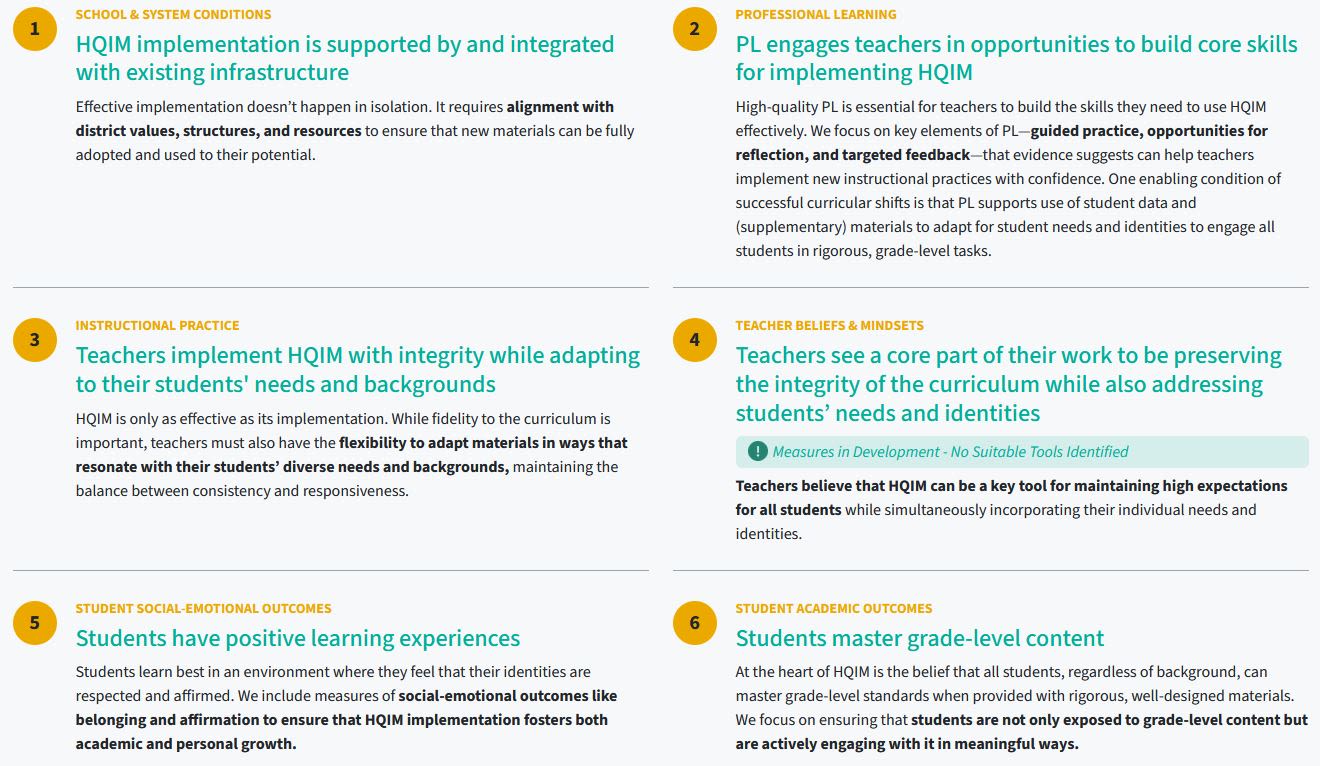
Assessing ELA Curriculum Shifts: A Practical Guide for Measurement and Progress Monitoring
This toolkit, developed by EdInstruments at Annenberg EdExchange and RPPL, is designed to support PL providers, district leaders, and coaches who want to track implementation progress and PL quality across the first several years of ELA curriculum shifts for grades 3–12.
Family Engagement Done Well

From the U.S. Department of Education: Family Engagement Learning Series Briefs
- Family Engagement to Support Student Success
- Family Engagement to Support Student Engagement and Attendance
- Family Engagement to Support Immigrant and Multilingual Families
- Family Engagement to Support Student Mental Health and Well-Being
- Family Engagement to Support Kindergarten Readiness and Early School Success
- Family Engagement to Support College and Career Pathway Success
Spotlight on TA & Technology
AT Guidance Myths and Facts Graphics and Game from the Center on Inclusive Technology & Education Systems
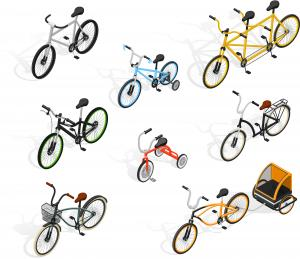
What Do a Bike and an IEP Have in Common? Ensuring the Parts Work Together to Promote Progress: Short video on IEPs from the Progress Center
Evaluators' Corner
Evaluating Professional Learning: A Tool for Schools and Districts
Toolkit from REL Northeast & Islands
Tweets/Podcasts/Videos
Coaching for Leaders: Help your Team Coach Each Other with Keith Ferrazzi podcast episode
If You Have a Minute
Native American Child and Student Data
IES’ National Center for Education Statistics
Question:
What data do you have on the learning experiences of American Indian/Alaska Native (AI/AN)1 students throughout their education careers and on the characteristics of AI/AN teachers and faculty?
Response:
Early Childhood
Elementary/Secondary Education
Students
- Of the 49.6 million preK–12 students enrolled in public elementary and secondary schools in fall 2022, some 449,400 (or 1 percent) were AI/AN students (source).
- In fall 2022, some 36,700 preK–12 students were enrolled in Bureau of Indian Education schools (source).
- In fall 2021, some 1 percent of K–12 students in private schools were AI/AN (source).
- In fall 2022, some 43 percent of AI/AN students attended public schools where students of color3 comprised at least 75 percent of total enrollment (source).
- As a percentage of all pre K–12 public school students in school year 2022–23, some 19 percent of AI/AN students received special education services under the Individuals with Disabilities Education Act (IDEA) (source).
- The average NAEP mathematics assessment score for AI/AN eighth-graders in 2022 (258 points) was not measurably different from the score in 2000 (source). The average NAEP reading assessment score for AI/AN eighth-graders in 2022 (246 points) was not measurably different from the score in 2002 (source).
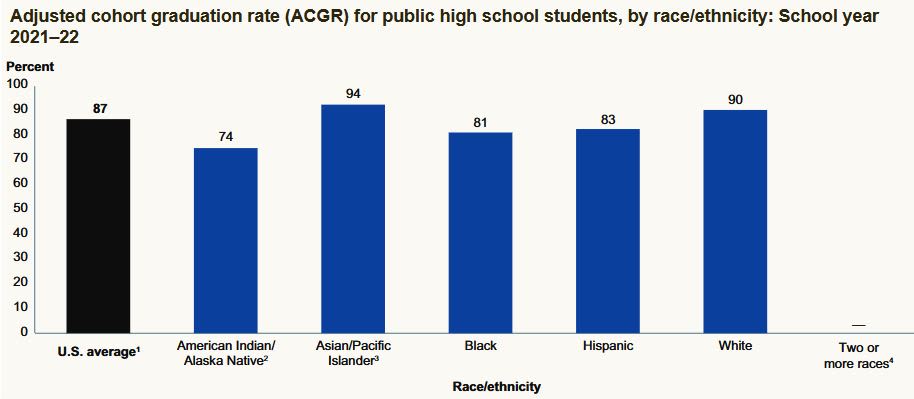
- In school year 2021–22, the 4-year adjusted cohort graduation rate (ACGR) was 74 percent4 for AI/AN public school students in the 50 states and the District of Columbia. The ACGRs for AI/AN students ranged from 46 percent in South Dakota to 91 percent in Mississippi.5 The ACGR was 75 percent for AI/AN public school students in Bureau of Indian Education schools (source).