Archived newsletter — Summer 2024. This issue preserves historical information; events, contacts, and resources may have changed.
Welcome to the 42nd issue of the SIGnetwork Newsletter published monthly for SPDG projects and their partners to learn about upcoming events, the latest relevant research, TA resources and training, and, most importantly, SPDG impact. We’re glad you're here!
Interested in reading past issues? Browse the Newsletter Archive. Was this email forwarded to you? Subscribe here.
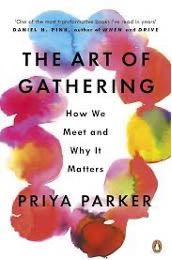
We are continuing our series exploring Priya Parker’s ideas from The Art of Gathering. The first chapter, DECIDE WHY YOU’RE REALLY GATHERING, is all about getting clear on the purpose of the event and ensuring each aspect is geared toward reaching that purpose. The second chapter, CLOSE DOORS, describes why opening the event to any interested party may prevent you from fulfilling the event’s purpose. Last month we discussed why Parker recommends DON’T BE A CHILL HOST. Then we explored how to CREATE A TEMPORARY ALTERNATIVE WORLD. Now we consider why we NEVER START A FUNERAL WITH LOGISTICS.
Consider the beginning of the 1st Star Wars movie. Instead of beginning with the credits, as had always been done up until that time, George Lucas began with a description of where the action was taking place and why we should care (In a Galaxy far, far away…). This was directly followed by an action scene featuring Princess Leia attempting to escape Darth Vader and sending out an SOS to Obi Wan Kenobi.

I can recall the emotions I felt when I saw it for the first time; it blew me away. Lucas was fined $250,000 for not starting with the credits, but the movie’s profits and its impact on moviemaking and moviegoers forever, far outweigh the one-time monetary fine. The purpose of Star Wars was to transport you to a galaxy far, far away and the opening sequence did just that.
Parker states, “However vital it may seem to start with housekeeping, we are missing an opportunity to sear our gathering’s purpose into the minds of our guests.” It’s not necessary to skip logistics - just don’t start with them.
The blog “Rise with Drew” provides us a reflection and action based on this “Art of Gathering” chapter:
- Reflection: Think of a powerful meeting or event you’ve attended or organized. How did the opening set the tone for what was to follow?
- Action: Be intentional about the opening of your next meeting, party, or event. Experiment and discuss with your team, what did we learn from this experiment?
-Jennifer
News You Can Use
2024 OSEP Conference
If you couldn’t attend the OSEP Conference, there are still ways to access content. The conference Guidebook provides materials for many of the sessions (i.e., slide decks, tools, and handouts). In addition, the publication K-12 Dive provides two articles summarizing important sessions:
- Moving from ‘pockets of excellence’ to ‘systems of excellence’ for students with disabilities | K-12 Dive (k12dive.com) The article quotes Deputy Secretary Cindy Marten’s speech, which emphasizes the importance of family and student voice:
““Having an equity-centered approach, for example, doesn’t happen by accident or in silos, Marten said. “It happens by design, in collaboration with families and students’ voices as well, at every decision-making table.”
- Louisiana district shows special education inclusion gains after successful partnership | K-12 Dive (k12dive.com) Once again, you see how family voice can lead to meaningful inclusion of students with disabilities:
“Improved parent-school relations and ongoing professional development in Louisiana’s East Baton Rouge Parish Public Schools has led to greater participation for students with disabilities in general education classes as well as in extracurricular activities, district leaders said Tuesday during a panel discussion at the U.S. Office of Special Education Programs annual conference.”
SPDG NIA & NFP
The new SPDG NIA and NFP have been published and applications are due August 23rd! Please note, if you are receiving new SPDG funds in this Fiscal Year (FY 2024), you are not eligible to apply.
SPDG National Meeting
The SPDG National Meeting is October 15-16 in DC. Room blocks and registration have been released!
We are looking forward to seeing you at the 2024 SPDG National Meeting, “EmpowerED: Elevating Voices, Enriching Education, Embracing Collaboration; The Adventure Starts Here.” We will be in DC at the Friends Meeting of Washington event center in the Dupont Circle neighborhood.
- Meeting Registration: To register please complete the meeting registration survey (registration link).
- Travel Information: If you would like to buy your plane ticket, please fly in on October 14th. October 16th will be a half-day, so an afternoon flight can work.
- Hotel Block: We have reserved a block of rooms at the Washington Hilton (hotel block reservation link).
- Breakout Sessions: Please keep your eyes peeled for a future email inviting breakout session presentations!
State Supports for Student, Family, and Community Engagement
The Office of Elementary and Secondary Education (OESE) and the Student Engagement and Attendance Center (SEAC) are pleased to invite you to join State Supports for Student, Family, and Community Engagement, a virtual learning series for SEAs, LEAs, and partners responsible for engaging students, families, and communities to promote regular school attendance:
- Explore effective engagement strategies used by States to address chronic absence;
- Identify ways to support LEAs with engaging key stakeholders to promote regular school attendance; and
Each meeting is designed for SEA teams to learn from subject matter experts, share with peers, and discuss how they can adapt evidence-based practices to their State’s efforts to address chronic absenteeism. This is part of a year-long focus on Building Systemic Supports for Better Attendance:
- Aug 20 @ 3:00 PM ET
- Aug 27 @ 3:00 PM ET
- Sep 3 @ 3:00 PM ET
Next SPDG Directors’ Webinar
Dr. Darcy Hutchins is the Director of Family School Community Partnerships at Colorado Department of Education and will join us to share the Family Engagement strategies that have worked, the best tools to make them work, and what NOT to do. Not every State has someone to lead their family engagement efforts, so we’re lucky to have a chance to learn from Dr. Hutchins!
SPDG Success!
The GREAT Alaska project is recruiting Alaska Native paraprofessionals and plans to enroll 24 to 36 participants by the end of year 3 in a grow your own program developing special educators who are able to use high-leverage practices and evidence-based literacy practices. Currently they have recruited 19 paraprofessionals who will receive training and coaching in the science of reading and mentorship to support their use of high-leverage practices.
Success that makes you Smile 😊

Don’t we all need a little good news? Check out this news feature from WBTV about the PTI partner to North Carolina’s SPDG, ECAC!
Improving Professional Learning
Problem-Free PD, According to Teachers, EdWeek opinion
The EdWeek Research Center found, as part of our State of Teaching Project, that 48% of the declared PD they received was “irrelevant.” Said one PD participant, “I wish admin. knew that every year doesn’t have to be a first year. We can build prior knowledge like we’re trying to do in the classroom.”
Here’s what they think does work:
- Peer-to-peer development can be invaluable. This can include shadowing another teacher’s classroom, peer-led training, and peer coaching.
- Tailor PD offerings to the knowledge and experience of teachers (e.g., novice teachers might not need the same PD as master teachers).
- Make PD systems work for teachers (e.g., inputting PD hours).
Team Teaching: A Boost to Teacher Retention, EdWeek article

“Before I came to Westwood, I deeply undervalued the need to work on the team, to focus on things like psychological safety, good processes for running meetings, clear expectations, good communication, even radical candor,” Owen said. “Teachers are not trained like that.”
Mary Laski, the study author and principal researcher for the Center on Reinventing Public Education at Arizona State University, found that after controlling for experience and demographics, the Mesa teachers working in teams were 9% more likely to say they planned to stay in teaching for the next five years than solo teachers. Teamed teachers were also significantly more likely than their solo peers to recommend teaching to a friend.
Laski found that team-based educators in Mesa also received higher average effectiveness ratings from their principals than solo teachers, particularly when later in their careers.
Family Engagement Done Well
Michigan provides strategies and guidance for leaders to engage families in supporting their children’s literacy for pre-K and school-age children.
Prepare for our next SPDG Directors’ Webinar by visiting the Colorado Department of Education’s Family, School, and Community Partnerships landing page.

Parents Call Chronic Absenteeism a Problem, But Most Can’t Define It
EdWeek article
By Evie Blad — June 07, 2024 (3 min read)

Spotlight on OSEP and ED-funded TA & Technology
Special Olympics Unified Champion Schools has created an “Inclusion Journey” activity that lets participants use critical thinking skills to consider the path to authentic friendships and meaningful inclusion. Take the journey as a group or individually, virtually or face-to-face with their card deck.

Preparing for the start of school is the perfect time to help teachers set goals for their students. Check out the National Center on Intensive Intervention’s suite of goal setting tools!
Evaluators' Corner
This Annenberg Working Paper is not for the faint of heart, but if you’ve been hoping for an extensive review of coaching practices along with operational definitions of coaching discourse, you are in luck! If you do read it, please let Jennifer know so the two of you can discuss 😊
Boguslav, Arielle. (2024). Parsing Coaching Practice: A Systematic Framework for Describing Coaching Discourse. (EdWorkingPaper: 24-941). Retrieved from Annenberg Institute at Brown University: https://doi.org/10.26300/eqga-qy12
Tweets/Podcasts/Videos
Elena Aguilar’s new book, Arise: The Art of Transformational Coaching provides processes and perspectives for coaching with equity in mind. In this episode of “Instructional Coaching with Ms. B,” Aguilar models one of these processes and describes how this book can help coaches and those who support them.
If You Have a Minute
From Chiefs for Change, the Registered Teacher Apprenticeship System Starter Guide.
This audit of Washington’s personnel systems provides Strategies to Improve Recruitment and Retention of Special Education Staff. Here they provide a high-level summary of the challenges districts face:
“Various factors can complicate school districts’ recruitment and retention efforts. Among them are unfavorable working conditions – including heavy caseloads, administrative responsibilities and lack of leadership support. Districts that can pay higher wages, even within the same region, may better attract and retain qualified staff. The quality of preparation and mentorship programs can affect teacher preparedness for the job and lead to turnover. Finally, community factors also create barriers to recruitment and retention.”
What’s the solution? The authors identified five areas of practice that can enhance school district efforts to recruit qualified special education teachers and support staff and retain them:
- Practice area 1: Create alternative pathways into the profession
- Practice area 2: Take advantage of newly reduced credentialing barriers
- Practice area 3: Provide financial incentives for special education roles
- Practice area 4: Promote manageable workloads
- Practice area 5: Establish supportive workplaces