Archived newsletter — May 2024. This issue preserves historical information; events, contacts, and resources may have changed.
Welcome to the 41st issue of the SIGnetwork Newsletter published monthly for SPDG projects and their partners to learn about upcoming events, the latest relevant research, TA resources and training, and, most importantly, SPDG impact. We’re glad you're here!
Interested in reading past issues? Browse the Newsletter Archive. Was this email forwarded to you? Subscribe here.
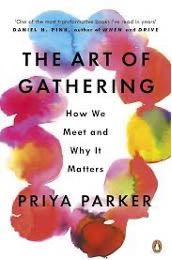
We are continuing our series exploring Priya Parker’s ideas in The Art of Gathering. The first chapter, DECIDE WHY YOU’RE REALLY GATHERING, is all about getting clear on the event's purpose and ensuring each aspect is geared toward reaching that purpose. The second chapter, CLOSE DOORS, describes why opening the event to any interested party may prevent you from fulfilling the event’s purpose. Last month we discussed why Parker recommends DON’T BE A CHILL HOST. Now we get to explore how to CREATE A TEMPORARY ALTERNATIVE WORLD.
Parker starts the chapter with, “Sometimes you have to spice things up.” (p 111). She talks about the importance of doing the foundational work first: determining your purpose, ensuring the right people are there to meet that purpose, and skillfully and willfully guiding people on the path to that purpose. If those foundations are in place, you are ready to have a little fun with the situation.
The author talks about the “rise of rules.” One example, “We invite you to be Fully Present with us at our UNPLUGGED WEDDING. Kindly turn off your phones and cameras.” (p. 113). She says the stating of these rules is more experimental and democratic than the unstated rules of etiquette guests are usually meant to follow.
Parker suggests gatherers (aka event organizers) can create one or more rules that will help a group overcome whatever it is that is stalling progress. She provides the example of a chair who has a board that just asks questions and never gets into the nitty gritty discussions that lead to action. The chair created a rule that no informational questions may be asked at the board meeting (all background information is provided well in advance of the meeting). What is stalling your group and what rule might help you be more productive?
-Jennifer
News You Can Use
Save the dates! You should now have two conferences on your calendar, and we encourage you to bring your PTI/CPRC, IHE, district, and Part C partners.
--The OSEP Conference is Aug 6-8 in Crystal City, VA. Register and Reserve your Room
--The 2024 SPDG National Meeting is October 15-16 in DC. Room blocks are being finalized and registration information will be released soon!
NASDSE-OSEP Webinar Series for potential SPDG applicants
Training, Coaching, and Alignment -- June 5th, 3-4:00 pm ET. Jennifer Coffey will share resources that help potential applicants plan their training and coaching systems. Joanne Cashman will explain braiding, integrating, leveraging, and aligning – all great verbs that are tougher in application. We will explore the right first steps to creating greater alignment and coherence in States. Click here to join the meeting
Next SPDG Directors’ Webinar.
Many States have developed Statewide Longitudinal Data Systems (SLDS), but how many States are able to use them to determine needs and impacts of their professional development system? Experts from the SLDS program will demonstrate what is possible with what is already available. June 6 from 3-4:30 ET on Zoom
EIR, Literacy Grants.
The U.S. Department of Education is pleased to announce the FY 2024 Education Innovation and Research (EIR) Grant Competitions. Evidence-based projects that include STEM, social-emotional learning, educator recruitment/retention, and other field-initiated innovations are welcome.
Notices Inviting Applications: 1. Expansion NIA, 2. Mid-phase NIA, & 3. Early-phase NIA
Deadlines for Transmittal of Applications:
• Expansion: July 05, 2024
• Mid-phase: July 05, 2024
• Early-phase: July 22, 2024
For more information (including other application material), visit the competition website.
Clarifying questions can be sent to eir@ed.gov. Please note that staff are unable to advise on proposed project ideas, eligibility determinations, or decisions about which tier/priority to submit under.
FY 2024 Comprehensive Literacy State Development (CLSD) Notice Inviting Applications (NIA)
The NIA was posted in the Federal Register on Tuesday, April 23, 2024.
Deadline for Transmittal of Applications: Monday, June 24, 2024, at 11:59:59pm Eastern Time.
The CLSD application package can be found on Grants.gov. FY 2024 CLSD Application Instructions: PDF
FY 2024 CLSD Grant Competition – Pre-Application Recording | Slides
Join an SPCR CoP by Friday, May 24!
The National Comprehensive Center (NCC) invites your state educational agency (SEA) to participate in the Strategic Planning for Continued Recovery (SPCR) Communities of Practice (CoPs). Each CoP will help SEA teams actively apply fiscal planning and sustainability strategies in your local context through structured activities and flexible supports that dive deeper into the SPCR content. Upon completion, your SEA will have increased knowledge and skills to use SPCR resources for planning and to support your local educational agencies (LEAs) to sustain priority investments.
SEAs can request to join one of the following CoPs:
- Supporting the Use of a Return-on-Investment Approach (ROI)
SEAs will develop and implement customized tools and processes, adapted from North Carolina’s ESSER Funding Cliff Toolkit, to help build LEAs' capacity to determine the return on their investments and inform sustainability decisions.
- Supporting LEAs in Making Trade-Off Decisions (Trade-Offs)
SEAs will engage in trade-off discussions within the SEA and with their LEAs to inform financial sustainability decisions. SEA teams will use tools, including The Investment Grid: Linking Costs and Outcomes or Budget Hold’em, to integrate trade-off considerations into SEA and LEA budgeting processes.
- Planning for Sustainability of SEA Systems (Sustainability)
SEAs will use the After-Action Review Guide to examine their internal processes and technical assistance supports provided to LEAs related to pandemic recovery plans. SEAs will use the information from the After-Action Review to inform decisions on how best to sustain effective practices.
SPDG Success!
MN SPDG Key Data Points
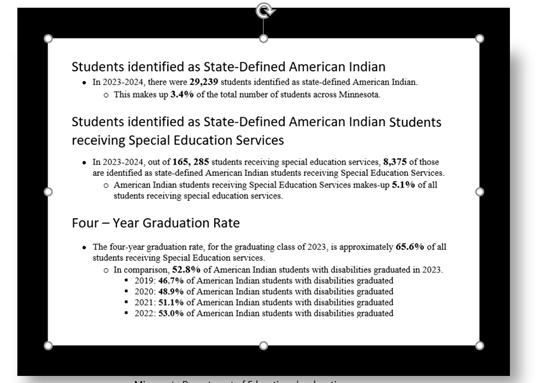
Minnesota’s SPDG Goal #1 focuses on their Part B State Systemic Improvement Plan (SSIP), to improve graduation rates for American Indian students with disabilities through the implementation of evidence-based practices in school districts with high concentrations of these students. The districts partnering with the SPDG have all chosen to implement Check & Connect, an evidence-based mentoring program.
The impact of the MN SPDG and their partners can be seen in the data below.
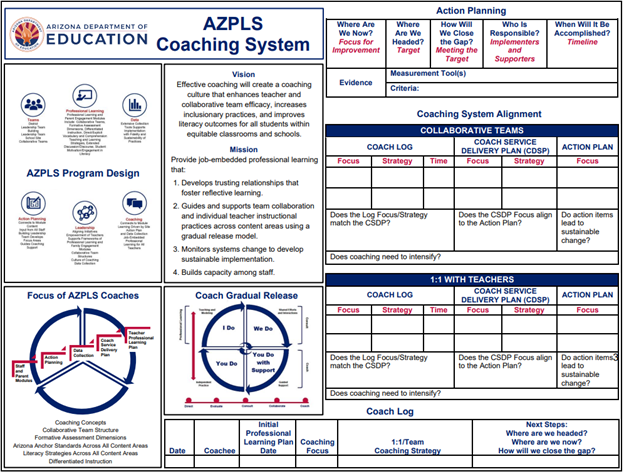
Improving Professional Learning
Coaching Guide, Arizona Professional Learning Serie
Implementing a 3 Step Coaching Framework in New Hampshire
NCSI Report
Highlights
- Created an infographic to visually depict their vision of coaching, which served to operationalize coaching, New Hampshire used this infographic to quickly explain how coaches coach, who is coached, time commitments involved in coaching, and the expected goals of coaching (I.e., improved teaching and student learning).
- Created supporting training materials and resources and included them in a Coaching Handbook on a cloud-based site.
- Created and used a coaching data system, including a brief, easy-to-use online coaching fidelity log, mapped out a feasible schedule of when to coaches would submit coaching logs, and tested the system to ensure that data could be readily compiled into reports.
Family Engagement Done Well
Should Working with Families be a Core Skill?
Ed Week Article
Highlights
- Teachers don’t feel prepared to interact with families.
- There is insufficient coursework to prepare educators to work with families.
- Most states don’t have laws or policies requiring schools to train teachers in family engagement.
- Colorado and Nevada are the only states with laws requiring that their DoE employ staffers who support districts with family and community engagement policies and practices.
- CAEP is revising its standards around family engagement. The Association for Advancing Quality in Educator Preparation also developed its teacher preparation standards with a focus on family engagement.
- Dr. Patricia Brewer at Wesleyan has her special education scholars tutor local students while their parents learn about how to navigate the special education system from her.
Promising Partnerships Practices 2023: A collection of initiatives from districts and schools about working with families and community partners for student learning.
Colorado Department of Education resource.

Spotlight on OSEP and ED-funded TA & Technology
KU leading project to bring coaching to teachers of math and science in special education | KU News
Evaluators' Corner
Family Engagement Evaluation Tools
- Family Engagement Efficacy Beliefs of Educators (FEEB-E) Survey
Family engagement efficacy beliefs are defined as the degree to which an educator believes they are capable of organizing and executing the courses of action required to partner with families for improving instruction and student learning. The FEEB-E offers a way to measure efficacy beliefs of educators in schools or districts. - Family and Community Partnerships Reflection Tool for Family-Facing Professionals
Developed by the Ohio Statewide Family Engagement Center with the National Association for Family, School, and Community Engagement, the goal of this tool is to serve as a springboard for self-reflection and a catalyst for ongoing conversation around family and community engagement practice. - Colorado's School-Family-Community Partnership Survey (link to more info)
Developed by CDE specifically for Colorado schools, this instrument assesses the outreach efforts of a school or district based on the perceptions of school personnel and families. - Conversation Starter Tools
These tools can help education decisionmakers understand the level of alignment between different members of the school community (teachers, families, students) and their vision for what makes a quality education. - Starting Points Inventory (PDF)
This inventory, based on the National Standards, can be used in a number of ways to help plan, implement, and evaluate partnership initiatives. - Multi-Tiered Family, School, and Community Partnering Supports Checklist (PDF)
This checklist provides examples of how schools engage families and communities, based on the Multi-Tiered Systems of Support (MTSS). - Measure of School, Family, and Community Partnerships (PDF)
This instrument helps assess whether your school is involving parents, community members, and students in meaningful ways. - FSCP Scales and Measures
A collection of scales selected by the Expelled and At-Risk Student Services (EARSS) staff and researchers at the University of Northern Colorado that can be used to measure parent improvement in their ability to support their child(ren)’s learning. - Colorado's P-12 FSCP Framework and Rubrics
Developed by CDE, this framework provides schools an image of what high impact FSCP work looks like. The associated rubrics will help schools and programs identify current levels of engagement with families and community partners, as well as understand next steps toward equitable partnership programs.
Tweets/Podcasts/Videos

Check out how the Michigan Department of Education’s Future Proud Michigan Educator Launch program is tackling teacher vacancies by expanding opportunities for high school students interested in careers in #education. https://rpb.li/gN8o

If You Have a Minute
The Moral Imperative for Teacher Retention
Article from our own Becky Gerdes, Minnesota SPDG’s Project Coordinator. Link to Article
The School Superintendents Association (AASA) School Administrator Magazine, June 2024 Issue
Can an Upfront Cash Incentive Improve Teacher Recruitment and Retention
Fordham Institute article

Bottom line: Offering financially strapped prospective teachers funds in the months before they would enter the classroom appears to increase the number of educators in the short- and mid-term.
Financial nudges have been moderately effective in many other education-related contexts.