Archived newsletter — February 2024. This issue preserves historical information; events, contacts, and resources may have changed.
Welcome to the 38th issue of the SIGnetwork Newsletter published monthly for SPDG projects and their partners to learn about upcoming events, the latest relevant research, TA resources and training, and, most importantly, SPDG impact. We’re glad you're here!
Interested in reading past issues? Browse the Newsletter Archive. Was this email forwarded to you? Subscribe here.
Decide Why You're Really Gathering
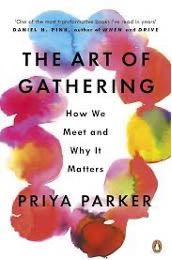
We are at the beginning of a series exploring Priya Parker’s ideas in The Art of Gathering. The first chapter, Decide Why You’re Really Gathering, is all about getting clear on the purpose of the event and planning each aspect to help you reach your purpose. This includes the guest list, location, agenda, how participant preparation, event flow, closing, and how you continue the work beyond that day.
How do you and your team zero in on the purpose of your event? How do you ensure the details of the event are well-aligned with the purpose? What makes it challenging to stick to a shared purpose? Finally, how do you evaluate whether the event met this purpose?
Our March newsletter will explore Parker’s thoughts on how and why to Close Doors. By the end of the series we hope you have at least 3 new ideas to try at your own meetings (virtual and in-person). We do ask you share… how have Parker’s ideas helped to make your gatherings more meaningful? Email your thoughts to me and we will compile ideas to share with the group (Jennifer.Coffey@ed.gov).
-Jennifer
News You Can Use
Our 1st “Making Numbers Count” Book Club meeting was a big success! One idea we discussed was:
“If you think you have a statistic that says something important, skip the middleware: say the important thing directly. You want people to see and feel the numbers, not just read them.”
If you would like to attend the next meeting, please read page 48-84 and do the following Homework:
- Choose 1 OSEP Fast Facts brief to review using our new knowledge, or
- Bring a piece of data you want to translate with the group’s help; and
- Add a quote that stood out to you to the Padlet link.
New Community!

The SPDG Early Childhood Working Group met last month for the first time. Facilitated by Sunyoung Ahn (OSEP) and Ted Burke (ECTA). The purpose is to bring Part B and Part C state representatives together, along with community partners and families, all in the service of responding to early childhood needs that are the focus of SPDG projects.
One question the group delved into was… Why are partnerships with early childhood/Part C within the SPDG vital to you and your state? The next meeting is March 26th from 3-4:00 ET. Interested in joining this community? Email Jennifer Coffey (Jennifer.Coffey@ed.gov).
Save The Date!
The Office of Special Education and Rehabilitative Programs (OSERS) will host the second session for the 2023-2024 Symposium Series, Beyond the IDEA and WIOA requirements: Knowing what to expect when it matters! virtually on February 28, 2024, from 1:00 – 2:30 pm Eastern!
The Individuals with Disabilities Education Act (IDEA) provides protections and ensures a free appropriate public education in the least restrictive environment for eligible children with disabilities, and the Workforce Innovation and Opportunity Act (WIOA) prepares job seekers, including youth with disabilities and those with significant barriers to employment, to obtain, maintain, and advance in employment in the competitive labor market through education, training, and support services.
Join us as we look beyond the requirements of IDEA and WIOA to maximize the experiences and opportunities for children, youth and young adults with disabilities and their families.
Watch the first event for the Expect, Engage, Empower Symposium Series here.
Additional updates on important resources, event, and information will continue to be posted on OSERS’ Expect, Engage, Empower: Successful Transition for All homepage.
Questions? Contact the planning team at OSEP-EEE@air.org.
SPDG Success!
The North Carolina SPDG grant (NC-SIP) has provided training experiences to 480 instructor candidates in evidence-based reading and math practices. Among all 137 classroom teachers observed, 91 percent delivered instruction with fidelity. This is of significant value to their teacher pipeline.
Improving Professional Learning
What matters and for whom? Exploring characteristics of teacher residency programs and their relationship to participant perceptions.
This study from the Annenberg Foundation at Brown University explores teacher residency programs (TRPs) across the nation through program and participant survey data from the National Center for Teacher Residencies (NCTR) to identify important TRP structures for resident support. Qualitative analyses of multiple open response items across participants details four salient TRP structures:
- providing extended clinical experience,
- localizing individual support,
- offering programmatic training, and
- teaching practical professional knowledge.
Kwok, A., & Nguyen, T. D. What matters and for whom? Exploring characteristics of teacher residency programs and their relationship to participant perceptions.
edworkingpapers.com
Picking ‘Evidence-Based’ Programs: 5 Mistakes for Educators to Avoid
By Sarah D. Sparks — January 19, 2024
When choosing an intervention, Liz Eisner from IES advises teachers and leaders to balance its benefits with the effort of implementation: the materials, staff, and training, as well as how much of the intervention students need to see results. A cheap, 5-minute intervention that boosts background knowledge before a new lesson and a yearlong, intensive tutoring program can both benefit students, but they each require very different levels of investment from schools.
Family Engagement Done Well
Family Engagement Quality Indicators Checklist
The North Carolina SPDG has developed these indicators (based on the work of the Louisiana SPDG) to determine if a school has the necessary structures in place to ensure meaningful family engagement. It is recommended that the School Leadership Team or Advisory Committee complete the Quality Indicators pre-test at the beginning of the school year and six months to one year later conduct a post-test. The 4 domains:
- Communication;
- Family Support;
- Decision Making; and,
- Partnerships.
Family Engagement with Students at the Center
This paper written by Ohio’s Statewide Family Engagement Center offers 4 research-based strategies for administrators and educators to empower student voice and elevate student role in schools’ and districts’ family engagement practices and policies. The brief synthesizes research on student voice, family engagement, and adolescent development.
Spotlight on OSEP and ED-funded TA & Technology
Supporting a Culture of Data Literacy and Use to Improve Instructional Quality
Infographic from REL Pacific
Evaluators' Corner
ICYMI: Measuring Teacher Professional Learning: Why It's Hard and What We Can Do About It
Case Studies from RPPL
In October 2023, the Research Partnership for Professional Learning (RPPL) shared a white paper about measuring teacher professional learning. It was collectively produced by a working group across RPPL’s network, centering the voices and practices of organizations working alongside districts, schools, and teachers, understanding that they are well-situated to surface the challenges and needs of practitioners. In the report, they describe the measurement challenges that PL organizations confront and offer views from inside these organizations about where there are opportunities for improvement.
Podcasts of the Month
The School Leadership Show recently featured our own Becky Gerdes (MN SPDG) on their podcast. She discussed her book, “Forget Hiring; Let’s Try to Keep the Teachers We Have.”
Improving Teacher Learning on the TeachThought Podcast (Ep. 321)
Jan 25, 2023
Stacey Alicea and Heather Hill of RPPL (The Research Partnership for Professional Learning) discuss their research brief, Building Better PL: How to Strengthen Teacher Learning.
If You Have the Time
On Chronic Absenteeism and Improving School Attendance:
- Has School Become Optional? | The New Yorker
- Report: Schools Won’t Recover from COVID Absenteeism Crisis Until at Least 2030 – The 74 (the74million.org)
- Have students who left public schools during the pandemic returned? | The Thomas B. Fordham Institute
And after that you may need a “make me smile” moment…
Jeremiah One and Five interviews Davante Adams in this uplifting video. A big “thank you” to Annette Young, who brought Jeremiah One and Five to the attention of the Native American Working Group.