Archived newsletter — October 2023. This issue preserves historical information; events, contacts, and resources may have changed.
Welcome to the 35th issue of the SIGnetwork Newsletter, published monthly for SPDG projects and their partners to learn about upcoming events, the latest relevant research, TA resources and training, and, most importantly, SPDG impact. We’re glad you're here!
Interested in reading past issues? Browse the Newsletter Archive. Was this email forwarded to you? Subscribe here.
Thinking Flexibly
What’s your shoe of choice today? Is fashion your aim or are you all about comfort? Personally, I am somewhere in-between and I’m wearing a lug sole loafer something like this:

Why are we talking about your shoe choices? Our first keynote speaker, Katie Novak, described how we make different choices in response to our context and our personal preferences. An example of this is considering right at this moment whether you would rather read a report, listen to a podcast about the topic, or watch a video presentation. This is a concrete way of considering choices students should be making about their learning and environment. We are at a critical juncture for student engagement and providing students voice and choice is paramount.
Universal design for learning (UDL) provides a framework to support students’ voice and choice and Katie makes UDL concepts simple and concrete. In fact, she uses all the SUCCESs elements (simple, unexpected, concrete, credible, emotional, & storytelling). Who could forget Katie’s example of fidelity using her Beauty Counter lotion?

This story of fidelity (or lack of) is a nice gateway to considering how UDL and implementation science work together. We can take it a step further and think about how MTSS, UDL, and Implementation Science work together, with equity underlying how these frameworks are approached. Check out this interactive brief. For another perspective on MTSS, UDL, implementation science, and equity Massachusetts developed with Katie Novak MTSS Mobilization Guide (mass.edu)
I’ll be thinking more flexibly about how we help kids flourish and I hope you will, too!
Warmly,
Jennifer
News You Can Use
Mentorship Pairings
Periodically we ask if SIGnetwork folks want a mentor or would be willing to be a mentor. Through the conference registration, we received the names of 22 people who would like to mentor and 15 people who want to work with a mentor.
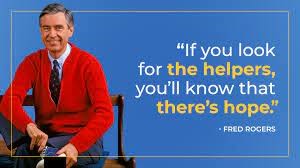
We are so appreciative of both the people who want to help and the people who want to grow their skills. And I think having more than enough helpers would make Mr. Rogers proud; we are fortunate to be part of this network.
If you did not request a mentor and would like one, please reach out to Jennifer Coffey (Jennifer.Coffey@ed.gov).
Book Club!
At the SPDG conference, I shared the books that have made a difference to SIGNetwork. Participants also shared books that have made a difference, and we received a request for a book club to dig into a book together.
Please email Jennifer Coffey (Jennifer.Coffey@ed.gov) if you are interested in participating and vote for your preferred book:
Coaching for Teachers and Systems Change
How to Make Virtual Engagement Easy
Upcoming Directors’ Webinar
Can’t get enough of the conference content? Wish you could have participated in every breakout session? Have we got a webinar for you!
SPDG National Meeting presenters will share headlines and resources from their sessions. Come ready to ask questions and add to the conversation. Thursday, November 2nd from 3-4:30 ET on Zoom.
SPDG Success!
SPDG Success
We reached our fidelity target for the first time since 2017! This is Program Measure 2: Improving Fidelity. Congratulations and thank you for your hard work!!
And many thanks to our Fidelity Workgroup, who provided ideas such as Fidelity Fridays and infusing resources, strategies, and ideas into the SPDG Program Area Meeting and National Meeting.
Improving Professional Learning
Improving Professional Learning
Measuring Teacher Professional Learning: Why It's Hard and What We Can Do About It
Ensuring all children receive an excellent education requires measuring and understanding how teacher professional learning impacts teacher and student experiences and educational outcomes. Despite the importance of measuring teacher PL, professional learning practitioners agree the field lacks the tools needed to effectively evaluate the implementation and outcomes of PL programs.
In RPPL’s Measuring Teacher Professional Learning: Why It's Hard and What We Can Do About It, leaders from 10 PL organizations share insights on the measurement challenges that PL organizations face and where there are opportunities for improvement. This report centers the voices and practices of organizations working alongside districts, schools, and teachers, who are closest to the challenges and needs of teachers and students. It also includes case studies from seven PL organizations that provide real-world examples of how each organization is developing and applying innovative, practical, and equity-focused measures.
Measuring Teacher Professional Learning is a call to action for the entire PL field to shift how we think about, develop, deploy, and fund teacher PL measurement efforts.
Read the white paper > Explore the case studies >
The Importance of Instructionally Focused Professional Learning, Paper from Council of Chief State School Officers (CCSSO).
In 2017, CCSSO and a cohort of interested states launched a network dedicated to the vision that every student, every day, is engaged in meaningful, affirming, grade-level instruction. The hope is that by working together in a cross-state network, states can advance this body of knowledge faster than each state might do on its own. A core component of strong instruction is the use of high-quality instructional materials (HQIM) that are aligned to college- and career-ready standards in the hands of well-supported educators who know how to use the materials. That is, high-quality instructional materials alone are insufficient. Successful instruction requires that teachers receive professional learning (PL) both during their educator preparation and on the job, so that they know how to skillfully use and adapt the materials to their own context to meet each student’s needs. This paper provides a research-based summary of what we know about high-quality professional learning (HQPL). It describes four types of academically focused PL, the structures for delivering PL, the key attributes of successful PL and the conditions that systems need to ensure are in place. It also discusses what states can do to align teacher learning across the continuum from educator preparation through in-service support. Finally, it looks at the different metrics that might be used to understand and monitor PL — from access through implementation to quality and efficacy. The hope is that this information will provide an organizing vocabulary to make communication more effective and will point states toward the policies, practices and “guardrails” that can lead to the skillful, adaptive use of HQIM
Also from CCSSO, Implementing a Vendor Marketplace Strategy: Guidance and Toolkit - Google Drive
CCSO provides step by step guidance for setting up processes that support districts in selecting effective professional learning vendors. Why is this important? Every minute of teacher time is precious. Professional learning should always be time well-spent.
How Coaches Get In, article
Kappan Online
Jen Munson and Evthokia Stephanie Saclarides
September 25, 2023
Professional development coaches can boost teaching and learning. To work with willing teachers, they need strategies to gain access.

Six types of strategies for gaining access are commonly used. Note: A single strategy may not be enough!
· Relational
· Structural
· Direct Offers
· Indirect
· Cloaked Coaching
· Pitching in.
Family Engagement Done Well
Serving on Groups (http://www.servingongroups.org/) provides useful tools for anyone who is currently serving, or wants to serve, on a decision-making group. This can include parents, students, educators, administrators, and community members. Supported by the SPDG, it was researched, developed, and written collaboratively by a broad stakeholder group of statewide agencies, school representatives and family members across Wisconsin.
These tools, including on-line training modules for individuals and a guidebook for use in training groups, were developed to address the need to support families in serving on decision-making groups, and the information and structure can be used to support anyone serving on those groups. It is a great introduction for some, a welcome refresher for others, and a resource for all, including experts and mentors, so everyone can come to the table ready to serve. The sections to the Guidebook are:
· Section 1: Opportunities to Get Involved
· Section 3: Processes Groups Use
· Section 5: Tips and Strategies for Groups
· Section 6: Understanding Data
· Section 7: The Role of Families on Groups
· Section 8: Skills for Serving on Groups
Spotlight on OSEP and ED-funded TA & Technology
Upcoming National Center on Pyramid Model Webinar
Coaching Conversations: Motivational Interviewing as a Strategy to Prompt Reflection and Practice Change
Date: November 1, 2023
Time: 3:00 pm ET
Duration: 1 hr
MTSS-R Implementation Guide
National Center on Improving Literacy (NCIL) developed a step-by-step guide to implementing multi-tiered systems of support in reading (MTSS-R). The purpose of this guide is to lead schools through the process of implementing MTSS-R focused on five major MTSS-R elements. The MTSS-R implementation process occurs across multiple years and is fueled by a continuous improvement cycle.
Evaluators' Corner
That Implementation Science Podcast
That Implementation Science Podcast
Measuring the Implementation Stages
Lisa Saldana joined the show to talk about:
· The importance of measuring and planning implementation stages and how they can help improve whether the implementation of your program will be sustained.
· The importance of engagement and readiness planning.
· How good pre-implementation planning can help programs withstand challenges.
If You Have the Time
Inclusive Learning Communities Practice Profile
Wisconsin Department of Public Instruction
The Inclusive Learning Communities (ILC) Practice Profile describes the essential attributes of a learning environment that is inclusive of each and every learner. Outlining five core competencies, this practice profile document aims to provide both educators and leaders a framework to promote and support inclusive classrooms, schools, and programs.
Professional Collaboration Among Learner Supports
Inclusive Mindsets
Learning Culture, Climate and Relationships
Planning and Facilitation
Authentic Learner Engagement
Picture this! Take a look at these pics that include children and adults who have disabilities.
The vision of the UK Human Development Institute is the full participation and contribution of all people with disabilities in all aspects of society. These photos can be downloaded and used to create and enhance visual and digital products, social media posts, and project websites.

Visit www.hdi.uky.edu and subscribe to receive updates.