Archived newsletter — December 2021. This issue preserves historical information; events, contacts, and resources may have changed.
News You Can Use
Learn about Kentucky, Michigan, and Pennsylvania’s strategies for reaching educators during the pandemic in December’s recorded Directors’ Webinar.
ICYMI: Recordings from the SPDG National Meeting, “Telling Our Stories”, are now available! Head to our Depot page to watch videos, such as Florida describing their use and adaptation of a sustainability tool.
SPDG Success
Ohio’s Partnerships for Literacy 2020-2021 Impact Report demonstrates the school personnel and family members they’ve made a difference for. Examples of the impact:
“P4L has allowed me to be in more contact with the school and what is going on with the teaching and planning aspects. I have learned more about the needs of the elementary building, teachers, as well as parents on an individual basis. The insight I have gained with the purpose of the tests and breaking down the test scores has been beneficial to me as a parent and being able to offer assistance in interpreting the test scores in an easier way.”
- Mindy Disbrow, Parent
“This work has given us important insight into the parent perspective regarding how to best communicate student progress in a timely, meaningful, and understandable way.”
—Kristi Molter, Elementary Principal
Research Roundup
Rethinking How to Promote Reading Comprehension, by Hugh W. Catts

An excerpt: “Still, I am especially encouraged by Louisiana’s efforts and am hopeful that other states and districts will also consider how to better align what is tested with what is taught. It is these types of programs, combined with integrated literacy and content-rich curricula, that I believe can better address comprehension. These programs move beyond characterizing comprehension as simply one of the “Big Five” and recognize its complexity and what it will take to help all children understand and learn from what they read. I look forward to attending future conferences where the results of these programs are presented.”
Making Your Work Easier
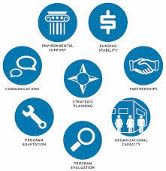
Program Sustainability Assessment Tool
For those States not using SISEP’s capacity assessments, this sustainability tool can help you consider what needs to be in place so that your intervention or program receives continued support.
MiFamily: Michigan's Family Engagement Framework
This guide provides programs and schools research and best practices to further improve and develop family engagement.
MiFamily: Michigan's Family Engagement Framework Video
Michigan’s Parent Leadership in State Government (PLISG) connects parents and professionals to build stronger families and communities across the state of Michigan.
The PLISG initiative provides training and support to parents in using their voice to impact local, state, and federal program planning and policy development. Parents are given the knowledge and skills to participate on advisory boards, committees, and other decision-making bodies.
Spotlight on OSEP/TA
For State Leaders, By State Leaders Webinar Series
Many state leaders use the evidence-based Pyramid Model framework as an approach to build social and emotional competence in early care and education programs. Wisdom gleaned by state leaders to systematically implement, scale up and sustain their Pyramid Model efforts are being highlighted in this webinar series. Each webinar includes lessons learned and resources related to specific aspects of statewide implementation. We welcome champions of this work to join, share, and learn with us. For more information and to register go to: https://challengingbehavior.cbcs.usf.edu/Training/Webinar/archive/2021/11-30/2021-11-30-WTF-State-Leaders.html
For State Leaders, By State Leaders: State Leadership Team Equity Inventory
01/27/2022 12:00-1:00 pm EST
NCPMI: Alissa Rausch, Angela Van Polen
State Leader Panelists
For State Leaders, By State Leaders: Scaling and Sustaining Funding Through Policy Development
02/24/2022 4:00-5:00 pm EST
NCPMI: Deborah Ziegler
State Leader Panelists
For State Leaders, By State Leaders: Meaningful Data Use for State Leadership Teams: Guidance for Cultivating Growth of the Data and Evaluation Essential Structure
03/08/2022 12:00-1:00 pm EST
NCPMI: Alissa Rausch, Angela Van Polen
State Leader Panelists
SISEP’s Implementation for Educators
Effective Teams
Learn about how to put an effective team together and the selection criteria that will help ensure a successful team. Also includes SISEP’s main team functioning resources.
Podcasts of the Month
Practical Access Podcast
Drs. Lisa Dieker and Rebecca Hines, professors at the University of Central Florida in the College of Community Innovation and Education, have worked with schools and parents across the country. They take a fun and informal look at "practical" situations from teachers, parents, and people with disabilities. Our approach is fast, flexible thinking about "real" life problems. This podcast is not about the "legal" approach, but our best advice from both personal and professional experience.
Buzzing with Ms. B: The Coaching Podcast
How to Not Be One More Thing
Teachers are struggling to keep up with all the changes and challenges in education. Instructional coaches don't want to be one more thing for teachers to worry about. This makes some coaches reluctant to visit classrooms and coach, but the truth is teachers need us now more than ever. In this episode, I share my top four tips for coaching overwhelmed teachers. Listen to my suggestions for shifting your mindset and how to help teachers right now.
If You Have the Time
Embracing Equity from Annie E. Casey:
storify.com/RJResourceguide
Excerpt: Use the basic elements of effective issue framing to make the case by articulating:
-Shared values at stake
-The problem
-The cause
-The solution
-The action needed
These elements help to create a complete frame that is clear, concise, compelling, and convincing.
Use personal stories to illustrate systemic patterns and familiar elements (characters, setting, action, and conflict) to make your story memorable.
Always project positive and widely shared values such as fairness, equity, inclusion, unity and dignity.
There is a difference between stakeholder engagement and empowerment. Engagement may simply involve getting input or limited participation. Empowerment involves taking leadership, making decisions and designing solutions and strategies at every phase of social-change efforts.
Engaging stakeholders early on can help to determine what data should be included.
Improved Mathematics Outcomes using Active Implementation: Kentucky’s Effective and Durable Change
Kathleen Ryan Jackson, Caryn Ward: State Implementation and Scaling up of Evidence Based Practices at the National Implementation Research Network, University of North Carolina at Chapel Hill
Keith Smolkowski, Jeff Gau: Oregon Research Institute
Kentucky’s use of implementation science has resulted in improved middle school math outcomes for students with disabilities. Teachers in four KY districts have improved math outcomes for students with disabilities in general educations settings. Their efforts have also improved outcomes for Black students.